Engagement & Bridal
Engagement Rings Ready to Ship Women's Wedding Bands Men's Wedding Bands Design a Bespoke Ring Solitaire Rings Hidden Halo Rings Three-Stone Rings Toi et Moi RingsFine Jewellery
All Fine Jewellery The Tennis Edit The Evermore Collection Diamond Studs & Earrings Necklaces & Pendants Bracelets Ready to GiftLab Grown vs Natural Diamonds: A Working Jeweller's Honest 2026 Answer
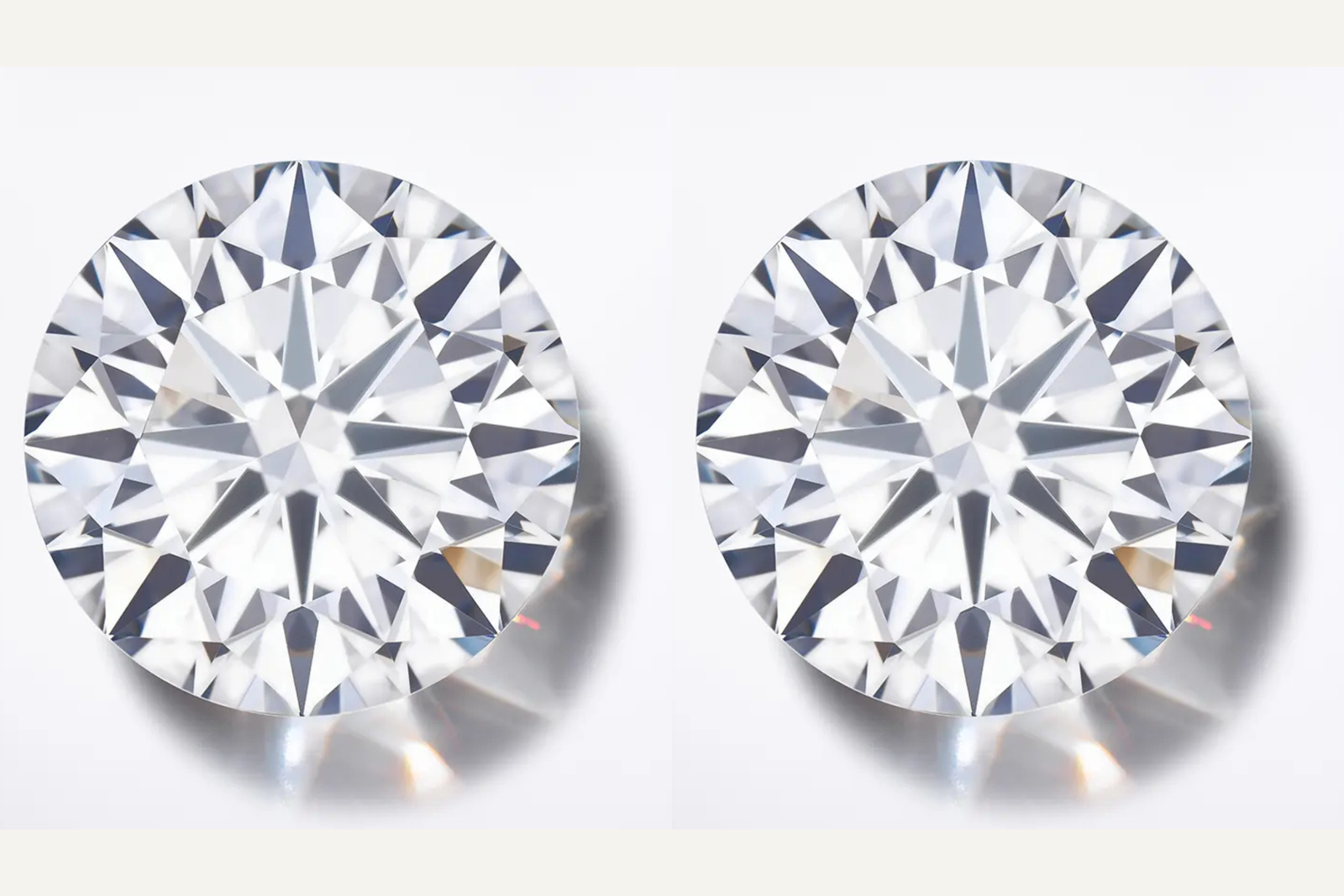
Almost every couple who walks into our Brisbane studio asks the same question within the first ten minutes. Are lab grown diamonds real? Are they as good? Will they hold their value? Should I be embarrassed to give one to my partner? The answer to all of those questions, after five years of fitting both kinds in real engagement rings, is the same. Lab grown diamonds are chemically and optically identical to mined diamonds. They cost a fraction of the price. They are easier to source ethically. They are now the default choice for almost every couple who walks through informed. And I am, deliberately, the wrong person to ask if you want a sales pitch, because we no longer use mined diamonds in our work at all.
My name is Zac. I am the Head Designer and Master Jeweller at Orlaithea, a Brisbane atelier on Edward Street. I trained under my father, Nick Ireland, a master jeweller who spent decades working with some of the rarest mined diamonds in the country. We made the conscious decision to work exclusively in lab grown diamonds in 2024, after several years of testing them in real client rings alongside the natural stones we had always used. This guide is the result of that work. It is written in 2026, with no incentive to oversell lab and no incentive to dismiss mined.
What each diamond actually is
A diamond is pure crystallised carbon. The atoms are arranged in a tetrahedral lattice that gives the stone its hardness, brilliance, and dispersion. That description applies identically to a mined diamond and to a lab grown one. The only difference between the two is the address where the crystal formed.
Mined (natural) diamonds
Form between one and three billion years ago in the upper mantle of the earth, roughly 150 to 200 kilometres below the surface, under extreme heat and pressure. They are carried to the surface by volcanic eruptions in rare rock formations called kimberlite pipes. Most of the world's mined diamonds come from a handful of mines in Russia, Botswana, Canada, Australia, and South Africa. Roughly one in a million natural rough crystals is large enough and clean enough to become a 1 carat polished engagement ring stone. The rarity is real; it just isn't the same thing as the price.
Lab grown diamonds
Form in a controlled production environment over two to four weeks, using one of two methods. CVD (Chemical Vapour Deposition) grows the crystal one atomic layer at a time inside a plasma reactor at around 800 degrees Celsius. HPHT (High Pressure High Temperature) recreates the mantle conditions in a press at around 1,400 degrees Celsius and 60,000 atmospheres of pressure. Both produce a real diamond. The carbon atoms bond into the same tetrahedral lattice as a mined stone. Under a loupe, under spectroscopy, on a hand, they are diamonds.
If you want a longer technical explanation of the science and the certification chain, we wrote a separate primer at our diamond education page.
How they compare, side by side
The table below covers the things people actually want to compare. The short version: lab grown and mined diamonds are the same stone in every measurable optical and physical property. They differ on price, certification chain, traceability, ethics, and resale expectations.
| What matters | Mined diamond | Lab grown diamond |
|---|---|---|
| Chemical composition | Pure crystallised carbon | Pure crystallised carbon |
| Hardness (Mohs scale) | 10 | 10 |
| Refractive index (sparkle) | 2.42 | 2.42 |
| Visible to the naked eye difference | None | None |
| Identifiable with a magnifying loupe | No | No |
| Identifiable with specialist spectroscopy | Yes (by trained gemologist) | Yes (by trained gemologist) |
| Typical formation time | 1 to 3 billion years | 2 to 4 weeks |
| Certification (centre stone) | GIA, IGI, AGS | IGI, GIA |
| Price per carat (2026, 1ct VS clarity, G colour) | $8,000 to $14,000 AUD | $1,200 to $2,500 AUD |
| Available sizes at engagement-ring quality | Limited by what mining produces | Up to 10 carat+ with current technology |
| Traceability of origin | Variable, depends on supply chain | Identifiable to a single laboratory |
| Resale value (informal market) | 20 to 35 percent of retail typically | 10 to 20 percent of retail typically |
| Insurance treatment in Australia | Insurable at appraised value | Insurable at appraised value |
| Environmental footprint per carat | Higher land impact, lower energy | Lower land impact, energy intensive |
| Ethical sourcing certainty | Kimberley Process, with caveats | Clear single-source provenance |
If you stop at this table, you have what most people actually want to know. The next sections go deeper on the questions that come up most often in our consultations.
The four Cs apply identically
Cut, colour, clarity, carat. The standard diamond grading framework was built for mined stones, and it applies in the same way to lab grown stones. The most respected gemological labs (GIA and IGI) certify both. A lab grown diamond is graded on the same four scales as a mined one, by the same instruments, by the same people. A G colour, VS1 clarity, ideal cut 1.5 carat lab grown looks visually identical to a G colour, VS1 clarity, ideal cut 1.5 carat mined diamond. We've held them side by side on dozens of consultations and watched experienced jewellers fail to pick which is which without certification papers.
What changes is what you choose to spend on. With mined diamonds, you typically trade carat for clarity, or colour for size, because budget forces a compromise. With lab grown, the same money buys higher quality across all four Cs simultaneously. We typically recommend D-to-G colour and VS-or-better clarity for centre stones at our studio because the price differential is small enough that there's no reason to drop down.
Want to see a lab grown diamond in person?
Reading about a stone is not the same thing as holding it. We keep a range of certified lab grown diamonds at our Brisbane studio for clients to compare, in different sizes, colours, and clarities. Book a viewing and bring your scepticism.
Book a consultation Diamond educationThe price gap, and why it exists
The single most striking difference between mined and lab grown is price. A high-quality 1.5 carat lab grown diamond costs around 80 to 85 percent less than its mined equivalent at retail. The gap widens as carat size increases. A 3 carat mined diamond at G/VS1 might run $50,000 AUD or more. The equivalent lab grown will land around $6,000 to $8,000 AUD.
This is not because lab grown stones are inferior. They are not. The price gap exists because lab grown diamonds have eliminated three structural costs that built up over a century of natural diamond marketing:
- Scarcity premium. Mined diamonds are not actually rare in a geological sense (there are hundreds of millions of carats in the global pipeline). What was rare was the controlled supply through a single dominant distributor. Lab production breaks the controlled supply.
- Distribution chain markup. A typical mined diamond passes through five to seven hands between mine and consumer, each adding a margin. Lab grown stones pass through one to three.
- Marketing legacy. The price of a mined diamond includes nearly a century of accumulated marketing spend establishing it as the only valid engagement stone. Lab grown stones have not had to fund that narrative.
The result, for a buyer in 2026, is that the same budget either buys a smaller mined diamond or a significantly larger and higher-quality lab grown one. We've written a full cost breakdown using real client work at our 2026 cost guide.
Certification: IGI vs GIA
Both the Gemological Institute of America (GIA) and the International Gemological Institute (IGI) certify lab grown diamonds. Historically GIA was the gold standard for mined stones. They began grading lab grown diamonds with full colour and clarity scales in 2020. IGI has been certifying lab grown diamonds for longer and is the dominant lab grown certification globally.
For an engagement ring centre stone, either certification is acceptable. We accept both at Orlaithea, with a slight preference for IGI for lab grown stones because the historical data is deeper and the grading scales have been settled longer. The certification report should include cut, colour, clarity, carat, polish, symmetry, fluorescence, and a unique laser inscription number on the girdle of the stone that matches the certificate. Without that inscription, no certification is meaningful.
For mined diamonds, GIA remains the most respected. A mined diamond without GIA, IGI, or AGS certification on the centre stone is, in 2026, a stone you cannot independently verify. That is not a deal-breaker on a small accent stone. It is a deal-breaker on the main.
Resale and value: the honest answer
This is the question that produces the most anxiety in consultations, and the answer is harder than the marketing on both sides suggests.
The honest position: no engagement ring is a financial asset. Not a mined one, not a lab grown one, not a vintage one. The informal resale market for diamond engagement rings is poor across the board. A mined diamond engagement ring sold privately a year after purchase typically recovers 20 to 35 percent of its retail price. A lab grown engagement ring sold privately a year after purchase typically recovers 10 to 20 percent. Both numbers are awful. Neither stone is a savings account.
The actual question worth asking is sentimental, not financial. The ring you give your partner is not designed to be sold. It is designed to be worn for the next 30 to 50 years. The "value" of a ring is in the marriage it begins, not in its hypothetical resale.
If you are buying a diamond as an investment, an engagement ring is not the vehicle for that. Loose certified investment-grade stones are a separate category, and even there, lab grown is genuinely changing the price-of-entry conversation in interesting ways. But for an engagement ring? Buy the stone you want to look at every day for the rest of your life, in the size you actually want to wear, at the price you are comfortable spending. The decision is about love, not liquidity.
No engagement ring is a financial asset. Buy the stone you want to look at every day for the next 50 years, in the size you actually want to wear, at the price you are comfortable spending.The conversation we have every week in the studio
Ethics and environment, with data
This is a fraught topic and the honest answer matters. There is no perfect choice. Both mining and lab production carry environmental and social cost. The trade-offs are different.
Mining
The land impact of diamond mining is significant. Open pit kimberlite mines move enormous quantities of earth per carat of finished diamond. The water and energy demand on local communities can be considerable. The Kimberley Process, established in 2003, was designed to prevent "conflict diamonds" funding armed groups. It works to varying degrees and has well-documented gaps; provenance certainty is difficult on a stone that has changed hands many times.
Lab production
Lab grown diamonds are energy intensive to produce. The most-cited critique is that some facilities run on fossil-fuel-derived electricity, which undermines the "green" framing. The most-cited counter is that an increasing number of lab grown diamond producers operate on renewable energy (Diamond Foundry, for example, operates on hydroelectric power). The energy intensity is lower per carat than the land impact of mining, but it depends entirely on the energy source.
The honest summary
A lab grown diamond grown using renewable energy in a transparent supply chain is unambiguously the lower-impact choice. A lab grown diamond grown using coal-fired electricity in an opaque supply chain may not be. The best you can do, as a buyer, is ask your jeweller where the stone was grown, what energy source the facility uses, and whether the supplier publishes any sustainability data. At Orlaithea, we work with two suppliers, both of whom run on renewable energy and publish public sustainability reports. We're happy to talk you through the specifics in person.
The photography test
One of the more revealing exercises we do in consultations: we put a mined diamond and a lab grown diamond of the same colour, clarity, and carat side by side on a velvet pad, photograph them with a phone, and ask the client to identify which is which. The success rate is around 50 percent, which is to say, random. The human eye cannot distinguish them. A high-quality camera cannot distinguish them. The only reliable way to tell them apart is specialist spectroscopy in a gemological lab, and even then it's a question of identifying the growth signature rather than seeing a difference in the finished stone.
If you would like to do this test yourself, ask any reputable jeweller (us, or anyone else who carries both) to set up a blind comparison. The result is the same everywhere. They are the same stone.
Why we chose lab-only
For most of our practice, we offered both mined and lab grown. Around 2023 we noticed that almost every client, given a fair side-by-side comparison and honest pricing, was choosing lab grown for the centre stone. By 2024 the ratio was nearly 100 percent. The mined diamond inventory we held for the small remainder felt increasingly like a courtesy rather than a useful service. In late 2024 we transitioned to lab-only.
The decision was not ideological. It was responsive. We make engagement rings for couples who, when given complete information, were choosing lab grown. Continuing to offer mined stones we couldn't defend on any axis except marketing tradition started to feel dishonest. So we stopped.
This does not mean we think mined diamonds are wrong, or that anyone choosing one is making a mistake. Plenty of people genuinely prefer the multi-billion-year origin story, or have a family stone they want to use, or simply love the idea of natural rarity. All of those reasons are valid. They are just not reasons we encounter often enough anymore to justify holding a parallel mined inventory.
Designing a ring around a stone you already have?
If you already have a mined diamond (an inherited stone, a previous ring, or one you've already bought), we will absolutely build a custom design around it. The setting and craft is identical. We've worked with mined family stones many times. The lab-only policy is about what we source for new clients.
Begin a custom design How we craftWho should still buy mined
To be genuinely fair, three groups will likely prefer a mined diamond in 2026.
1. The collector or investor in loose stones
If you are buying a large, exceptional, certified stone as a stand-alone asset, mined diamonds still hold their established secondary market more reliably than lab grown. This is a niche scenario and almost never overlaps with an engagement ring purchase.
2. The buyer with a strong origin preference
If the multi-billion-year story matters to you on its own terms, that is a valid aesthetic and emotional position. A mined diamond carries a kind of geological poetry that a 14-day lab process does not. Neither view is wrong.
3. The buyer working with a family stone
If you have a mined diamond from a parent or grandparent, that stone has a story no new stone (mined or lab) can match. We build new rings around inherited stones regularly, and it remains one of the most meaningful kinds of work we do.
If none of those apply, the case for lab grown is, in our honest view, very strong.
Five myths worth dispelling
Myth 1
Lab grown diamonds are fakes or imitations
They are not. They are diamonds in every measurable sense: chemistry, structure, hardness, refractive index, dispersion. The only difference is the address where the crystal formed. The Federal Trade Commission in the US dropped the word "natural" from its diamond definition in 2018 because the distinction was not material.
Myth 2
A jeweller can tell the difference by looking at the ring
They cannot, with the naked eye or even a loupe. Identification requires specialist spectroscopy in a gemological laboratory. Anyone who tells you otherwise is bluffing.
Myth 3
Lab grown diamonds will lose their value to zero
The lab grown wholesale price has dropped significantly over the past decade as production has scaled. It has now stabilised. Retail prices for high-quality, certified, well-set lab grown engagement rings have held steady for the past two years. The "lab grown is collapsing" narrative is several years out of date.
Myth 4
Lab grown diamonds aren't suitable for an engagement ring
They are. Hardness, durability, daily wear, lifetime service are all identical. We have set hundreds of lab grown engagement rings, including pieces like the Alicia Round, and they have aged exactly as mined stones would.
Myth 5
Your partner will be able to tell, or judge you for it
Your partner cannot tell the difference looking at the ring. As for judgement: in 2026, the conversation has shifted enough that most informed people now consider lab grown the more thoughtful modern choice. The "tradition" of mined diamonds is a much shorter tradition than it appears (the engagement diamond as default is a 20th century marketing creation). If you are worried about this question, ask your partner directly. Most of the time, the answer is liberating.
The short version
Lab grown and mined diamonds are the same stone, chemically and visually. They differ on price (lab grown is materially cheaper), certification chain (both are well-certified, IGI is dominant for lab), traceability (lab is clearer), and informal resale (mined still holds a slight edge, but both are poor). Neither is a financial asset. Both are a 30 to 50 year purchase. The honest case for lab grown in 2026 is overwhelming for most buyers. We work exclusively in lab grown for that reason, not as an ideological stance but as a response to what informed clients consistently choose.
If you'd like to compare both in person, we'll happily set up a blind side-by-side. Book an appointment at our Brisbane studio, read our diamond education page for the technical depth, or read how a custom engagement ring is designed if you're ready to start building.
Frequently asked questions about lab grown vs natural diamonds
Are lab grown diamonds real diamonds?
Yes. They are chemically, physically, and optically identical to mined diamonds. Pure crystallised carbon, same hardness (10 on the Mohs scale), same refractive index, same fire and brilliance. The Federal Trade Commission in the US updated its diamond definition in 2018 to recognise this. Lab grown diamonds are diamonds, full stop.
Can a jeweller tell the difference between a lab grown and a mined diamond?
Not with the naked eye, and not with a standard loupe. Telling them apart reliably requires specialist spectroscopy in a gemological laboratory, which identifies subtle growth signatures rather than visible differences. The finished stones are visually indistinguishable.
How much cheaper are lab grown diamonds?
For a 1 carat G/VS1 ideal-cut diamond, the lab grown stone is typically 80 to 85 percent less than the mined equivalent at retail. The gap widens as carat size increases. A 3 carat lab grown might run $6,000 to $8,000 AUD versus $50,000+ AUD for the mined equivalent.
Do lab grown diamonds hold their value?
The honest answer: no engagement ring (lab or mined) holds significant resale value on the informal secondary market. Mined recovers around 20 to 35 percent of retail privately. Lab grown recovers around 10 to 20 percent. Engagement rings are not financial assets. They are 30 to 50 year purchases meant to be worn, not sold.
Are lab grown diamonds more ethical?
A lab grown diamond produced using renewable energy in a transparent supply chain is unambiguously the lower-impact choice. A lab grown diamond produced using coal-fired electricity may not be. Mining has significant land impact and supply-chain opacity. The best you can do is ask your jeweller for the energy source and provenance of the specific stone.
Which certification should I look for on a lab grown diamond?
IGI or GIA. Both are reputable. IGI has more historical data on lab grown stones; GIA has broader name recognition. The certification should include cut, colour, clarity, carat, polish, symmetry, fluorescence, and a unique laser inscription on the girdle of the stone that matches the certificate number. Anything else is incomplete.
Can my partner tell if I bought a lab grown diamond?
Not by looking at the ring, no. Lab grown and mined diamonds are visually identical. If your partner asks, tell them. In 2026 most informed people consider lab grown the more thoughtful modern choice, not a compromise.
Will a lab grown diamond last as long as a mined one?
Yes. Both are 10 on the Mohs hardness scale, the hardest known natural substance. Daily wear, durability, longevity over decades are identical. Lab grown engagement rings will outlast you and your great-grandchildren on hardness alone.
Do you only sell lab grown diamonds at Orlaithea?
Yes, for new stones. We sourced both mined and lab grown until 2024, but the proportion of clients choosing lab grown reached close to 100 percent. We continue to set existing mined diamonds (family heirlooms, previous rings, stones a client already owns) into new custom designs.
Can I insure a lab grown diamond engagement ring?
Yes. Lab grown diamond engagement rings are insurable at their appraised replacement value, the same as mined diamond rings. Australian insurers (NRMA, Allianz, Q Underwriting, etc.) treat them as standard jewellery items.
If you have a question we haven't answered, the fastest way to get a real answer is to ask us in person. Book a consultation at our Brisbane studio, no obligation.
Written by Zac, Head Designer and Master Jeweller at Orlaithea. Brisbane studio: 150 Edward Street. Updated May 2026.
Every ring starts with a conversation.
Bring the questions this guide raised to a free consultation at 150 Edward Street, or begin a custom design from anywhere in the world.
Begin Your Custom Ring